Updated: August 2026
The Ultimate Komodo Liveaboard Route for Seeing Manta Rays
- It prioritizes key cleaning stations like Karang Makassar and Mawan.
- It includes southern sites like Manta Alley, which attracts feeding mantas with cooler, nutrient-rich waters.
- The route strategically balances world-class manta dives with Komodo’s other essential experiences, such as the Padar Island trek and dragon spotting on Rinca.
The low, resonant hum of the ironwood hull vibrates through the deck as the phinisi slices through the Flores Sea. The air, thick with salt and the promise of rain, hangs heavy. Below the turquoise surface, a shadow, impossibly large and graceful, glides into view. It is a shape of pure fluid dynamics, a seven-meter oceanic manta ray banking in the current. This is not a passive vacation; it is an active pursuit of giants. For those of us dedicated to marine encounters, charting a course through Komodo is a science, and the prime variable is the manta ray. The itinerary that follows is not just a trip; it is a meticulously planned expedition, a formula perfected over hundreds of voyages to place you the manta kingdom.
Charting the Course: Why a South-Central Itinerary Reigns Supreme
To understand the ultimate komodo liveaboard route for manta encounters, one must first understand the park’s dual personality, governed by the Indonesian Throughflow and seasonal monsoons. Komodo National Park experiences two distinct seasons. The dry season, roughly April through November, brings placid seas and exceptional visibility to the northern sites. However, the wet season, from December to March, is the true manta season. During these months, the prevailing winds and currents cause significant plankton blooms in the south, drawing in vast aggregations of filter feeders. This is when the nutrient-rich upwellings from the deep Indian Ocean turn the southern waters into a pelagic banquet. It’s here that we find our primary targets: the Reef Manta (*Mobula alfredi*) and the much larger, more elusive Giant Oceanic Manta (*Mobula birostris*). While reef mantas, with wingspans up to 5 meters, are reliably found at cleaning stations year-round, the oceanic giants, which can exceed 7 meters, are a special prize of the southern route. Our Atelier’s most sought-after charters, the ones whispered about by seasoned divers, are those that forsake the north entirely during these months, committing fully to the cooler, wilder, and more rewarding south. Aboard the best live aboard Komodo, the captain and cruise director make daily adjustments based on current reports, but the strategic framework remains: follow the plankton, find the giants.
Days 1-2: Embarkation and the Manta Spa of Karang Makassar
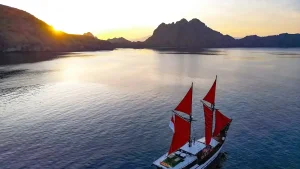
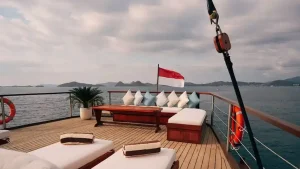
The journey begins in the dusty port town of Labuan Bajo, the gateway to the park. Stepping aboard a vessel like our flagship, the *Amandira*, is to enter a different world of polished teak and bespoke service. After a welcome briefing and equipment check, we set sail east. The first dive is typically a checkout at a site like Sebayur Kecil, a gentle slope allowing divers to reacquaint themselves with their gear and our guides to assess skill levels. But the true objective of day two lies the park: Karang Makassar, often simply called Manta Point. This is not a visually dramatic reef. It’s a vast, current-swept channel of coral rubble, extending for nearly 2 kilometers. Its value lies in its function. “Think of Karang Makassar as a day spa for manta rays,” explains our lead divemaster, Heri Santoso, who has logged over 4,000 dives in these waters. “The mantas arrive here specifically to be cleaned by colonies of wrasse. The key is to remain passive.” We descend to about 15 meters, find a suitable spot, and wait. The current, often running at 2-3 knots, requires a steady position. Soon, they arrive. One, then three, then a squadron of five reef mantas, hovering effortlessly over the coral heads as cleaner fish dart in and out of their gills. It’s a mesmerizing, hypnotic ballet that can last the entire dive.
Days 3-4: The Southern Push to Padar and the Manta Vortex
The voyage south is a journey into a wilder Komodo. The dry, savannah-like hills of the central islands give way to the more verdant, dramatic landscapes of the southern coast, a result of the wet season rains. The air cools, and the water temperature can drop from 28°C to a bracing 23°C. Our first major stop is the iconic Padar Island. An early morning, pre-dawn trek to its summit is a mandatory ritual. The view from the top, as the sun illuminates the tri-colored beaches and volcanic ridges, is one of the most photographed vistas in Indonesia. But the real prize for us lies beneath the waves at a site called Manta Alley. This is a different beast entirely from Karang Makassar. Situated in a narrow channel between two rocky islands, it is directly exposed to the Indian Ocean swell. The site is a series of submerged pinnacles, and the experience is pure adrenaline. Here, the mantas are not just being cleaned; they are feeding. The cold, nutrient-rich water creates a plankton soup, and it’s common to witness a “manta vortex,” where 20, 30, or even 40 mantas cyclone together in a chaotic, beautiful feeding frenzy. According to Indonesia’s official tourism board, this phenomenon is one of the world’s great marine spectacles. This is advanced diving, where negative entries and experience in strong currents are non-negotiable, but the reward is an encounter of scale and energy.
Day 5: The Prehistoric Kingdom of Rinca and Southern Macro
No trip to Komodo is complete without paying homage to its most famous residents. We dedicate a morning to a land excursion on Rinca Island. While Komodo Island is larger, Rinca offers more reliable sightings of the Komodo dragon (*Varanus komodoensis*). Guided by a park ranger, we trek through the dry forest, encountering these prehistoric predators, which can reach 3 meters in length and weigh up to 90 kilograms. It’s a humbling reminder of the raw, untamed nature of this UNESCO World Heritage Site. After the terrestrial adventure, we a different world. The afternoon is reserved for exploring the macro-rich sites of the south, providing a perfect contrast to the big animal action. Sites like Cannibal Rock or Yellow Wall are underwater gardens of soft corals, home to a bewildering diversity of critters. Here, the focus shifts from the grand to the minute: pygmy seahorses, frogfish, and dozens of unique nudibranch species. This part of the itinerary showcases the incredible biodiversity of the Coral Triangle, where the sheer biomass of fish and invertebrate life is staggering. It’s a crucial element of a well-rounded expedition, reminding us that Komodo’s treasures come in all sizes.
Days 6-7: The Return North via Mawan and Batu Bolong
As we begin our journey back toward Labuan Bajo, the itinerary includes two final, essential stops. The first is Mawan, another excellent manta cleaning station. Mawan’s topography features a beautiful sloping reef that gives way to a sandy bottom. It offers a more relaxed manta encounter than the southern sites and is a known haunt for the rare, all-black morph of the reef manta, a truly magnificent sight. It serves as a perfect penultimate dive, a final, serene dance with the giants. The grand finale of our underwater exploration is Batu Bolong. While not a manta site, it is frequently cited by connoisseurs as one of the top ten dive sites on the planet. This small, rocky pinnacle, exposed to ferocious currents, has created a marine oasis. We dive in the lee of the rock, sheltered from the main flow, and descend down a wall that is vibrating with life. Thousands of orange anthias cloud the reef, while schools of fusiliers and surgeonfish stream past. Giant trevallies and white-tip reef sharks patrol the edges. The sheer density of fish is almost overwhelming. It is a 45-minute immersion in a perfect, self-contained ecosystem and the ultimate testament to Komodo’s marine vitality. On our final evening, a gourmet dinner is served on the main deck under a canopy of stars, a time to share stories and photos before disembarking the next morning in Labuan Bajo, forever changed by the magic of the park.
Quick FAQ: Planning Your Manta-Focused Komodo Expedition
What is the absolute best month to see mantas in Komodo? While mantas are present year-round, January and February offer the peak concentration, especially in the southern sites, due to plankton blooms. Water temperatures are cooler, but the encounters are more prolific with larger groups of oceanic mantas joining the resident reef mantas. The wet season conditions mean planning with a top-tier operator is essential.
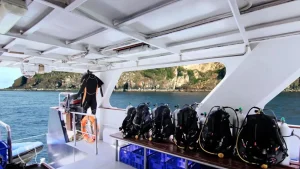
Do I need to be an advanced diver for this route? Yes, an Advanced Open Water certification with a minimum of 50 logged dives is the standard requirement for our fleet of phinisis. Komodo’s currents are powerful and can be unpredictable, particularly in the south at sites like Manta Alley. Demonstrable experience with drift diving, surface marker buoy deployment, and negative entries is crucial for both safety and enjoyment.
What is the difference between a cleaning station and a feeding site? A cleaning station, like Karang Makassar, is a specific coral bommie or section of reef where mantas and other pelagics come to have parasites removed by smaller cleaner wrasse. The behavior is slow and deliberate. A feeding site, like Manta Alley during a plankton bloom, is where they actively filter-feed on dense concentrations of plankton, often in large, fast-moving groups. A comprehensive route like this one targets both types of behavior for a complete manta ray experience.
What is the approximate cost for a luxury liveaboard following this route? For a high-end phinisi schooner offering the level of service, safety, and expert guidance required for this specific southern itinerary, rates typically start from $6,500 to $9,000 USD per person for a 7-day, 6-night charter. This price reflects a private cabin, all meals, diving, and expert guides.
This journey is more than a series of dives; it is a carefully orchestrated expedition into one of Earth’s last marine frontiers. It requires a vessel built for exploration, a crew with deep local knowledge, and an itinerary that moves with the rhythms of the ocean. To craft your own manta-centric voyage, explore the bespoke charters offered by the best live aboard Komodo. Our Atelier team is dedicated to curating the definitive Indonesian marine adventure, ensuring every detail aligns with the singular goal of placing you in the presence of giants. Let us design your ultimate Komodo liveaboard route.