Updated: August 2026
Planning Your Komodo Liveaboard Trip in the Dry Season
- Optimal Conditions: Expect calm seas and clear skies, with water visibility frequently exceeding 30 meters.
- Peak Wildlife Encounters: The dry season is the best time to see large aggregations of manta rays.
- Booking is Essential: High demand means securing a luxury vessel requires booking 9 to 12 months in advance.
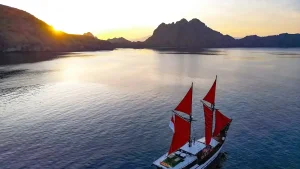
The air is warm and carries the scent of salt and sun-baked earth. From the teak deck of the phinisi, you watch the sea shift from deep cobalt to an impossible turquoise as you approach a secluded cove. The gentle thrum of the engine is the only sound breaking the silence of the archipelago. A flight of red-collared lorikeets flashes across the sky, their calls echoing off the golden-brown hills that define this dramatic landscape. This is the essence of a komodo liveaboard trip in dry season, a time when the elements align to reveal the national park in its most magnificent state.
Decoding the Dry Season: Why Timing Is Everything
As a travel editor, I’m often asked for the single most important factor in planning an Indonesian journey. For Komodo, the answer is unequivocal: the season. The archipelago’s climate is dictated by two monsoons, creating a distinct dry season that typically spans from April through early December. This is the period we advise our most discerning clients to target. Unlike the wet season, characterized by northwesterly winds and frequent downpours from January to March, the dry season delivers consistently clear skies, lower humidity, and placid sea surfaces. Air temperatures hover around a comfortable 30-32°C (86-90°F), while the prevailing southeasterly winds keep the waters in the central and northern parts of the park remarkably calm.
This meteorological stability is the foundation of a superior liveaboard experience. It means smoother sailing between the 29 islands that constitute the Komodo National Park, a UNESCO World Heritage site covering 1,733 square kilometers. It allows for safe and easy access to exposed, world-class dive sites that are often inaccessible during the wet season. Water temperatures remain inviting, ranging from 26°C to 29°C (79-84°F), perfect for long exploratory dives. For those looking to balance ideal conditions with fewer fellow travelers, I personally recommend the shoulder months of April, May, and November. The park is transitioning, the landscapes retain a hint of green, and you can often secure a premier vessel with slightly more flexibility. However, for the absolute peak experience, particularly for marine life, the period from June to September is unmatched.
Marine Life Encounters: What You’ll See Below the Surface
The true allure of a Komodo liveaboard is the world that lies beneath the waves, and the dry season presents this world in high definition. The primary draw is the visibility, which is nothing short of spectacular. The lack of rain and land runoff means the water clarity often pushes past 30 meters (100 feet), and on exceptional days, can reach an astonishing 40 meters. As our lead dive guide, Adi, remarked on a recent charter, “In August, looking down at Batu Bolong from the boat is like peering into a vast, living aquarium. You can trace the entire reef structure before you even get in the water.” This clarity transforms every a cinematic experience, illuminating the vibrant coral gardens and the prolific life they support.
This period is also peak season for manta rays. The plankton-rich waters, driven by oceanic upwellings, attract large aggregations of both reef mantas (Manta alfredi) and the larger, more elusive oceanic mantas (Manta birostris). Sites like Karang Makassar, often called Manta Point, become bustling cleaning stations where dozens of these majestic creatures, with wingspans reaching up to 5 meters, gracefully glide over the reef to be serviced by cleaner wrasse. Beyond mantas, the nutrient-dense currents support a staggering biodiversity. The legendary dive sites of the north, like Castle Rock and Crystal Rock, are best and most safely dived during these calmer months. Here, you can expect to encounter grey reef sharks, whitetip reef sharks, giant trevallies hunting in packs, and immense schools of fusiliers and surgeonfish that move as a single, shimmering entity. It’s a dynamic, action-packed underwater theater that solidifies Komodo’s reputation as one of the top five diving destinations on the planet.
The Dragon’s Domain: Terrestrial Exploration and Trekking
While the marine environment is a primary focus, a komodo liveaboard trip in dry season offers equally compelling experiences on land. This is the time to walk in the realm of the Komodo dragon (Varanus komodoensis), the world’s largest lizard. The dry conditions make the trekking trails on both Rinca and Komodo islands firm and easily navigable. More importantly, the period from May to August coincides with the dragons’ mating season. This can lead to increased activity as males patrol their territories and occasionally engage in dramatic, bipedal clashes for dominance—a rare and powerful sight. With the guidance of an experienced park ranger, these treks provide an intimate and safe encounter with a creature that has roamed these islands for millions of years.
The landscape itself undergoes a profound transformation. The verdant, rolling hills of the wet season cure under the sun into a vast, golden-brown savanna. This arid, starkly beautiful topography is particularly striking from the iconic viewpoint on Padar Island. The 45-minute trek to the summit rewards you with a panoramic vista of the island’s tri-colored beaches—white, black, and pink sand—set against a backdrop of azure bays and rugged, tawny peaks. It’s one of the most photographed scenes in Indonesia, and in the dry season, the chromatic contrast is at its most intense. This is also the ideal time for birdwatching; the Wallacean species that inhabit the park, including the critically endangered yellow-crested cockatoo, are often more visible as they forage in the sparser vegetation.
Choosing Your Vessel: The Art of the Luxury Phinisi
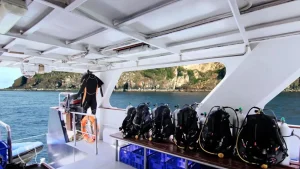
The vessel you choose is not merely your transport; it is your sanctuary, your dive center, and your private hotel for the duration of the journey. In Komodo, the pinnacle of this experience is a traditional Indonesian phinisi. These hand-crafted, two-masted wooden ships are marvels of maritime heritage, and the fleet of modern luxury phinisis combines this timeless design with five-star amenities. When planning with our clients, we emphasize that not all liveaboards are created equal. A superior experience, such as the ones we curate, is defined by details: spacious, air-conditioned cabins with en-suite bathrooms, a professional crew with a near 1:1 guest ratio, a private chef crafting gourmet meals, and state-of-the-art dive equipment.
Securing one of these elite vessels during the high-demand dry season requires foresight. We advise clients to begin the booking process 9 to 12 months in advance, especially for peak dates in July and August. The quality of the crew is paramount. A seasoned captain who has navigated these waters for decades understands the nuances of Komodo’s formidable currents, ensuring both safety and access to the best sites at the optimal time. An expert cruise director and dive guides elevate the journey from a simple vacation to a true expedition, offering deep insights into the region’s ecology and culture. The best live aboard komodo experience is a seamless synthesis of adventure and uncompromising comfort, a philosophy that guides the selection of every vessel in our portfolio.
Crafting the Perfect Itinerary: North, Central, and South
A well-planned itinerary is crucial for experiencing the full breadth of Komodo’s wonders, and the dry season unlocks the entire park. Journeys typically depart from the burgeoning harbor town of Labuan Bajo on Flores, a destination detailed by Indonesia’s official tourism board, indonesia.travel. From there, itineraries are tailored to the interests and diving experience of the guests. A classic 7-day/6-night charter will often focus on the central and northern regions. The central area is home to the “big three” terrestrial experiences: the Padar Island viewpoint and dragon trekking on both Rinca and Komodo islands. It also includes celebrated sites like Pink Beach and Manta Point.
The northern region, with its legendary currents, is a playground for advanced divers. The calmer surface conditions of the dry season make it possible to consistently access pinnacles like Castle Rock and Crystal Rock, which are magnets for pelagic species. A typical day might involve an early morning dive with sharks and giant trevallies, followed by a mid-day trek with dragons, and ending with a sunset cocktail on a deserted pink-sand beach. For longer charters of 10 days or more, it’s possible to venture to the southern reaches of the park. While the south is known for cooler water temperatures (sometimes dropping to 22°C/72°F) due to deep ocean upwellings, it offers a different underwater environment with unique critters and pristine soft coral gardens. A bespoke journey, which is our specialty at Best Liveaboard Komodo Atelier, allows for this flexibility, ensuring every day is calibrated to your desires and the prevailing conditions.
Quick FAQ: Your Dry Season Komodo Questions Answered
What is the essential packing list for a dry season trip? Pack for a tropical climate: lightweight linens and cottons, swimwear, and effective sun protection including a wide-brimmed hat, polarized sunglasses, and high-SPF, reef-safe sunscreen. For evenings on deck, a light sweater or windbreaker is advisable. Sturdy walking shoes are a must for the treks. While we provide top-tier dive gear, many seasoned divers prefer to bring their own mask, computer, and regulator.
Are the currents still a factor in the dry season? Absolutely. Komodo’s reputation for powerful currents is well-earned and year-round. They are the lifeblood of the ecosystem, delivering the nutrients that support such incredible biodiversity. The dry season’s calm surface weather does not negate the strong underwater flows. This is precisely why traveling on a premium liveaboard with expert local guides is not just a luxury, but a critical safety measure. They possess the intricate knowledge to time dives with the tides, ensuring you experience the thrill without undue risk.
Is a komodo liveaboard trip in dry season more expensive? Yes, this is the peak season, and pricing reflects the high demand and optimal conditions. Expect rates for premier charters to be 20-30% higher than in the wet or shoulder seasons. The best strategy is to plan well in advance. Booking a year out not only secures your place on a top vessel but also often provides the best value. The investment is rewarded with an travel experience.
The dry season in Komodo is not just a period of good weather; it is an invitation to witness an ancient ecosystem at its most vibrant and accessible. From the powerful gaze of a Komodo dragon to the silent ballet of giant mantas, the experiences here are profound and lasting. The key to unlocking them lies in meticulous planning and choosing an operator that understands the nuances of luxury adventure. At Best Liveaboard Komodo Atelier, we specialize in crafting these extraordinary journeys. Allow our team to design the best live aboard komodo trip imaginable, one that aligns perfectly with your vision of discovery. Explore our curated fleet and begin charting your course to the heart of the Coral Triangle.