Updated: August 2026
Private Charter vs. Shared Trip: Best Komodo Liveaboard Options
- Private charters allow for a completely bespoke itinerary tailored to your interests.
- Shared trips follow a proven route, ensuring you see all the essential Komodo highlights.
- Both options grant access to the 1,733-square-kilometer Komodo National Park.
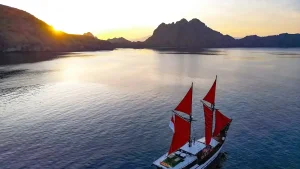
The air is thick with the scent of salt and dry earth, a unique perfume carried on the Flores Sea breeze. From the bow of a hand-crafted phinisi, the volcanic cone of Sangeang Api volcano pierces a sky bleeding from indigo to apricot. The low, steady thrum of the engine is the only sound, a heartbeat counting down the minutes to our first dive. This is the daily reality in Komodo, a realm of prehistoric dragons and kaleidoscopic reefs. But before you can immerse yourself in this ancient world, you face a foundational choice that will define your entire journey: Do you command your own private vessel, or join a curated expedition with fellow explorers? This decision is the first, and most critical, step in designing your ultimate Indonesian odyssey.
Decoding the Komodo Liveaboard Experience
To understand the choice, one must first appreciate the stage. The Komodo National Park is not a single destination but an archipelago of 29 islands covering over 1,733 square kilometers of land and sea. As a designated UNESCO World Heritage Site, its protection is paramount, encompassing a terrestrial ecosystem dominated by the world’s largest lizard and a marine environment that sits at the confluence of the Indian and Pacific Oceans. A land-based stay in Labuan Bajo simply cannot do it justice; the true marvels lie hours away by boat. A liveaboard is not merely accommodation; it is your key to this remote kingdom. These vessels, often traditional Indonesian two-masted phinisis built by the Konjo people of South Sulawesi, are floating boutique hotels. A 40-meter vessel might house only 12 guests, attended by a crew of 15, including a private chef, a cruise director, and multiple divemasters. The choice between chartering one of these magnificent ships for your exclusive use or booking a cabin on a shared journey fundamentally alters the texture of the experience, shifting the balance between autonomy and community, between a bespoke script and a well-rehearsed play.
The Case for the Private Charter: Ultimate Control and Exclusivity
A private charter is the nautical equivalent of a Savile Row suit—tailored exclusively to you. The primary appeal is absolute control over the itinerary. Imagine this: you’re diving at Manta Point, and a squadron of a dozen giant oceanic mantas, some with wingspans exceeding 5 meters, decides to put on a show. On a shared trip with a fixed schedule, you might get 50 minutes in the water. On a private charter, you can tell the captain, “We’re staying here all afternoon.” This level of flexibility is the pinnacle of luxury travel. I once spoke with Captain Iwan, a veteran with two decades of experience navigating these waters, who confided, “With a charter, I can take my guests to the secret spots. A hidden cove for paddleboarding, a specific reef where the mandarinfish mate at dusk. These places cannot handle three boats at once, so the scheduled trips must pass them by.” This bespoke service is the hallmark of the Best Liveaboard Komodo Atelier philosophy. The benefits extend beyond the route. Menus are crafted around your dietary preferences. The dive plan is built around your group’s certification level and interests, whether that’s macro photography or high-adrenalin drift dives. For a multi-generational family trip, a milestone celebration, or a serious underwater photography group, the privacy and personalization are non-negotiable. A top-tier phinisi charter can range from $40,000 to over $100,000 for a week-long voyage, but for a group of 10 or 12, this represents the ultimate way to experience the park’s wonders.
Shared Expeditions: Social Discovery and Exceptional Value
If a private charter is a bespoke suit, a shared expedition is a superb off-the-rack garment from a master designer. It offers access to the same high-quality experience at a fraction of the cost, making it one of the best komodo liveaboard options for couples, solo travelers, or small groups. The price per person for a 5-day trip on a luxury shared vessel might range from $2,500 to $5,000, a far more accessible figure. But the appeal is more than just financial. There is a unique camaraderie that develops on a shared boat. You are joined by a small, self-selecting group of people who share a passion for exploration and the natural world. Dinners become a vibrant exchange of stories from past travels, and the shared thrill of spotting a Komodo dragon on Rinca Island or powerful currents of Batu Bolong forges fast friendships. A divemaster I know, a marine biologist named Anya, prefers leading shared trips. “The energy is incredible,” she told me over a Bintang in Labuan Bajo. “You have divers from Germany, Australia, and Brazil all seeing the same pygmy seahorse for the first time. That collective awe is powerful.” The itinerary is a “greatest hits” compilation, perfected over hundreds of voyages to maximize wildlife encounters and scenic vistas within a specific timeframe, typically 4 to 7 nights. From the iconic sunrise trek on Padar Island to the surreal shores of Pink Beach, the route is efficient and spectacular, requiring no planning from the guest beyond showing up.
Itinerary Deep Dive: Flexibility vs. The Greatest Hits
Let’s contrast two hypothetical 5-day journeys. A private charter group, composed of experienced divers, might tell their cruise director they want to focus on challenging currents and large pelagics. Their itinerary could look like this: Day 1 involves a check-out dive and then heading straight north to the advanced sites of Gili Lawa Laut, like Castle Rock and Crystal Rock, known for sharks and giant trevally. Day 2 could be spent entirely at “The Cauldron,” a famous channel dive, attempting multiple crossings at different tides. Day 3 might be a dedicated “manta day” at Karang Makassar, followed by a night dive searching for critters. Days 4 and 5 could be spent exploring the lesser-dived southern coast of Komodo Island, where water temperatures can drop to 23°C but the coral health is off the charts. They might skip Padar Island entirely. In contrast, a classic shared trip itinerary is designed for variety. Day 1: A gentle dive at Sebayur Kecil and a sunset trek. Day 2: The quintessential Padar Island sunrise hike, a snorkel at Pink Beach, and an afternoon visit to Rinca Island to see the Komodo dragons. Day 3: Diving three of Komodo’s most famous sites—Batu Bolong, Manta Point, and Tatawa Kecil. Day 4: Exploring more northern sites before beginning the cruise back towards the gateway port of Labuan Bajo, which is well-documented by the official Indonesian tourism board. Both itineraries are exceptional, but they serve entirely different purposes. One is a surgeon’s scalpel, the other a masterpiece of composition.
Onboard Life: A Tale of Two Rhythms
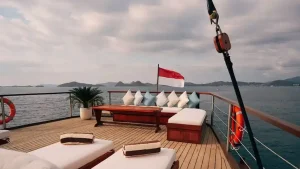
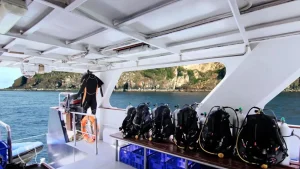
The daily rhythm of life at sea also diverges significantly. On a private charter, the day is a fluid conversation. Breakfast is served when you wake. The first dive briefing happens over coffee whenever the group is ready. The sundeck is your private living room, the dive deck your personal staging area. One evening, after a spectacular dive, our group decided we wanted a beach barbecue. Within two hours, the crew had set up a bonfire, a grill, and a beautifully laid table on a deserted slip of sand. This spontaneous magic is the essence of a charter. On a shared vessel, the day is more structured, which many find relaxing. A bell gently chimes at 7:00 AM for breakfast. The first dive briefing is at 8:00 AM sharp. Meals are communal affairs at set times, fostering social interaction. The menu is a set table d’hôte, though always exquisite and plentiful. There’s a comforting, predictable flow that allows you to simply relax and be guided through the experience. The level of service on high-end shared boats is still extraordinary, with crew-to-guest ratios often better than 1:1, but the focus is on the collective group experience rather than individual whims. Choosing between these two is a matter of temperament: do you prefer to conduct the orchestra or enjoy the symphony?
Quick FAQ: Your Komodo Liveaboard Questions Answered
What is the best time of year to go to Komodo?
The prime season runs from April to December during the dry season. For the absolute calmest seas and best visibility (often 30+ meters), the shoulder months of April-May and September-November are ideal. The peak period for spotting oceanic manta rays is generally June through September.
How do I choose between a private and shared trip?
The decision hinges on three factors: group size, budget, and flexibility. If you are a group of 6 or more, desire a custom itinerary (e.g., for technical diving or filming), and have the budget, a private charter is . If you are a solo traveler, a couple, or a small group content with a highlight-focused itinerary, a shared trip offers tremendous value and a fantastic social atmosphere, making it one of the best Komodo liveaboard options available.
Is Komodo only for advanced divers?
No, but it’s famous for its currents. While iconic sites like Batu Bolong and The Cauldron require advanced skills, there are dozens of protected, calmer sites perfect for novice divers, check-out dives, and PADI courses. A good operator, whether on a private or shared trip, will tailor the dive plan to the certifications and comfort levels of the guests onboard.
What is a realistic budget?
For a luxury shared expedition, budget between $600 and $1,000 USD per person, per night. This typically includes all meals, diving, and park fees. A full private charter for a premium 10-guest phinisi can range from $7,000 to $15,000+ USD per night for the entire vessel, exclusive of extras like alcohol, crew gratuity, and park fees which can be around $150 per person per day.
Ultimately, the choice between a private charter and a shared journey is a reflection of your personal travel philosophy. It’s a decision between absolute autonomy and curated discovery, between serene privacy and the energy of a shared adventure. Neither is inherently better; they are simply different paths to the same extraordinary place. The dragons will still stalk the shores of Rinca, the corals will still paint the reefs in impossible colors, and the sun will still set in a blaze of glory behind the islands. Finding the best live aboard komodo experience is about matching the vessel and the voyage to the vision you hold for your time in this remarkable corner of the world. To explore our curated fleet of private and shared vessels and begin crafting your own journey, we invite you to consult with us at the Best Liveaboard Komodo Atelier.