Updated: May 2026
Komodo Liveaboard With Kids: What Actually Works
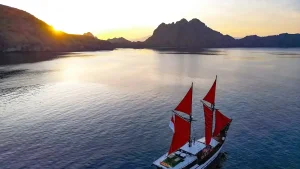
A Komodo liveaboard with kids works best on a private or semi-private phinisi in calm season (April–October), 3–5 days, with child-safe decks, flexible routes, gentle snorkeling sites and short hikes. At Best Liveaboard Komodo, the liveaboard desk of Komodo Luxury (Juara Holding Group, operating from Labuan Bajo since 2015), that usually means Deluxe or VIP phinisi charters, age 4+, and carefully timed visits to Padar, Pink Beach and Rinca.
Who We Are: Komodo Liveaboard Specialists for Real Families
Best Liveaboard Komodo is the dedicated liveaboard desk of Komodo Luxury, part of Juara Holding Group, operating departures from Labuan Bajo, Flores, since 2015. Our focus is clear: matching each family to the right phinisi, motor yacht or superyacht class, and building an itinerary that your kids can actually enjoy and handle.
Instead of pushing a one-size-fits-all boat, we start with non-negotiables for families:
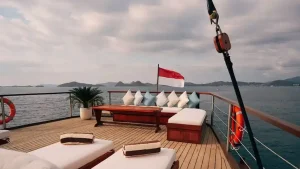
- Safety and layout: solid railings, clear walkways, shaded areas, and cabins close enough for parents to monitor children.
- Season-aware routing: adapting routes for sea conditions, currents and wind, especially for younger kids.
- Balanced days: no back-to-back 2-hour hikes and long snorkel sessions. Kids need breaks and early dinners.
- Clear rules on ages and swimming level: different routes if your children are 4–7 vs 10–15.
For detailed policy and logistics, see our FAQ and our breakdown of what a Komodo liveaboard costs.
Ages, Seasons and Itineraries: What Actually Works With Kids
Not every child, and not every month, is suitable for every itinerary. Based on years of Labuan Bajo departures, here is what consistently works for families.
Recommended minimum ages (always case by case, and subject to captain’s final decision):
- Under 3 years: We usually recommend short day trips by speedboat rather than overnight liveaboards. The boat environment, heat and noise can be overwhelming.
- 4–7 years: Suitable for 2D1N and 3D2N trips with calm-season conditions, lots of shade, short hikes and easy snorkeling in lifejackets.
- 8–12 years: Good candidates for 3D2N to 4D3N liveaboards, basic snorkeling skills, simple dragon walks, and maybe one or two longer hikes.
- 13+ years: Teens can usually handle 4–7 day itineraries, including more remote snorkel sites and optional intro dives.
Best seasons for family trips (sea and weather patterns, not a guarantee):
- April–June: Typically calmer seas, good visibility, fewer boats compared with peak July–August. Strong choice for first-time family liveaboards.
- July–August: Holiday peak, great for wildlife, but busier sites and potentially choppier crossings. We plan routes and timings carefully.
- September–October: Also attractive for families; water is often warm, and conditions can be stable.
- Wet season (roughly November–March): Highly variable. Some months work, some don’t. We evaluate trip by trip and may recommend shorter itineraries or reroutes.
Itinerary lengths that work best with children:
- 1-day speedboat: Good if you want dragons, a viewpoint and a beach without overnights.
- 2D1N: A soft introduction for 4–7 year olds or nervous sailors.
- 3D2N: Our most common sweet spot for active families; enough time for Padar, Pink Beach and Rinca or Komodo.
- 4–5 days: Better for teens or strong swimmers who want more snorkeling and quieter bays.
We continuously track how crowding, regulations and climate trends shape family planning; for deeper context see Komodo tourism strategy and climate impacts on the marine ecosystem.
Choosing the Right Boat Class for Families (With Realistic Cost Bands)
Families often start by asking “Which boat is safest for my kids?” and “What is this going to cost us?”. Below are typical vessel classes and indicative budget ranges, always dependent on vessel, season and group size. The exact quote is reconfirmed with you on WhatsApp before booking.
1. 1-day speedboat charter (4–8 passengers)
- Best for: Toddlers, cautious parents, or those short on time.
- Typical use: Padar sunrise, Pink Beach snorkeling, Rinca or Komodo Island, maybe Manta Point if currents allow.
- Indicative cost band: From around USD 400 for the whole boat (4–8 passengers), plus current park fees payable in person.
2. 2D1N private phinisi
- Best for: First “test” liveaboard with younger kids (4+), or multi-generational groups.
- Cabin style: Usually several cabins sharing a lounge and dining deck.
- Indicative cost band: About USD 200–350 per person when a group of 8 shares the boat.
3. Motor yacht (per day)
- Best for: Families wanting faster travel, more modern lines and often more enclosed decks.
- Speed: Faster crossings can mean less time at sea for kids who tire easily.
- Indicative cost band: Roughly USD 1,500–3,000 per day for the vessel, which is about USD 250–500 per person for 6–8 guests.
4. Superyacht charter (per day or by the week)
- Best for: Large or high-end families wanting maximum comfort, toys and privacy.
- Indicative daily band: Around USD 5,000–12,000 per day, roughly USD 830–2,000 per person depending on group size.
- By the week: Private superyacht programs usually start from about USD 50,000 per week for Komodo-focused itineraries.
5. Ultra-luxury phinisi tier
- Best for: Families seeking the top phinisi experience with full-crew service and high cabin standards.
- Indicative band: Around USD 15,000+ per night, typically structured as exclusive-use charters.
For extended routes, such as a Bali–Komodo crossing over 7–10 days, indicative vessel-only budgets usually range around USD 7,000–15,000, depending heavily on vessel class and season. These are more suitable for older kids and teens due to longer open-sea legs.
For a deeper dive into budget planning and cabin types, see best boats and cabins for Komodo and luxury, midrange or budget: which fits you.
Designing a Kid-Friendly Komodo Route: 3–5 Days That Actually Work
The biggest mistake families make is copying “hardcore diver” itineraries and then trying to squeeze kids into them. Family routes must be built differently. Below are patterns that have worked consistently.
Sample 3D2N family-friendly structure (non-diving focus):
- Day 1: Labuan Bajo boarding, short sail to a calm bay, check swim in lifejackets near the boat, sunset on a low, easy hill or from the deck.
- Day 2: Early Padar hike (adults and older kids; younger children can stay on the boat or do a shorter lower trail), mid-morning swim at Pink Beach, afternoon easy snorkel in a sheltered reef.
- Day 3: Morning Komodo or Rinca dragon walk on a guided, marked trail, then a final snorkel stop such as a calm coral bay before sailing back to Labuan Bajo.
Key adjustments for kids:
- Shorter walks: Padar’s full staircase is demanding. For small children we time cooler hours and allow shorter distances.
- Snorkel sites: We select spots with gentler currents and good visibility, and avoid exposed channels during peak flow times.
- Night schedule: Early dinners, reduced noise after dark, and clear quiet hours help young kids sleep.
- Rest periods: Midday is typically “boat time” in the shade: reading, games and naps while the boat repositions.
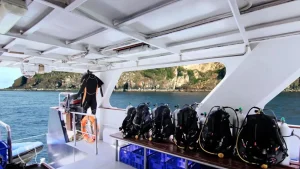
Families interested in diving can add introductory dives for teens or qualified dives for parents at appropriate sites, while younger kids snorkel from the boat under supervision. For dive-specific planning, see diving sites people search most and lesser-known dive sites in Komodo.
Komodo National Park rules and fees are current at the time of writing and must be reconfirmed before departure. We keep parents updated via our park fees and entry rules guide and direct WhatsApp briefings before your trip.
Safety, Seasickness and Practical Kid Logistics
For a Komodo liveaboard with kids, what actually works is preparation. The region is stunning, but also hot, bright and isolated once you sail away.
Safety basics we recommend for families:
- Lifejackets: Confirm kid-sized lifejackets for each child + a spare. Children wear them on tenders and often on deck during crossings.
- Deck rules: No running, no leaning over railings, no unsupervised children on stairs or near bow/stern while under way.
- Sun exposure: Wide-brim hats, long-sleeved UV shirts, reef-safe sunscreen, and regular shade breaks.
- Hydration: Many kids drink less in excitement. We schedule frequent water breaks.
Managing seasickness:
- Consult your pediatrician about child-appropriate motion sickness remedies.
- Avoid heavy meals right before crossings; keep snacks light and frequent.
- Choose cabins lower and more central for children prone to motion.
- We design routes that avoid unnecessary long open-water stretches if kids are sensitive. See seasickness, safety and motion tips for more detail.
What to pack for kids:
- Multiple swimsuits, rash guards and quick-dry clothes.
- Favourite small toys, books, or tablets (with offline content); connectivity is limited.
- Basic medicines appropriate for your child, including any prescriptions.
- Closed shoes or sturdy sandals for dragon walks and viewpoints.
Our dedicated packing overview at packing list for Komodo liveaboards includes a family-focused section.
Private Charter vs Shared Cabin: Which Actually Works for Families?
Families often debate whether to charter privately or join a shared-cabin departure. There is no single right answer, but a few patterns hold.
Private charter (phinisi, motor yacht or superyacht) tends to work best when:
- You have young children with unpredictable sleep or crying patterns.
- You want flexible timing for meals, naps and activities.
- Grandparents or multiple families share the cost, filling most cabins.
Shared-cabin departures can work when:
- Your kids are 8+ and comfortable in new social environments.
- You’re on a tighter budget but still want a liveaboard experience.
- You’re happy to follow a fixed schedule and share spaces with couples or solo travellers.
We outline the trade-offs in detail in private Komodo charter or shared-cabin trip and a family-focused guide at family-friendly Komodo trips with kids. For some families, a first short 1-day speedboat followed by a later 2–3 night charter is the most realistic path.
If you’re planning a Komodo liveaboard with kids and want to know what will actually work for your children’s ages, swim skills and dates, the fastest route is a direct WhatsApp chat or an email to sales@komodoluxury.com. We’ll map out specific vessels, honest sea-condition expectations and a day-by-day family plan before you commit.