Updated: February 2026
Why Pink Beach Komodo Is Pink & How to See It by Liveaboard
Pink Beach in Komodo is pink because millions of microscopic foraminifera (red-shelled marine organisms) and pieces of red coral mix with the area’s naturally bright-white calcium sand. Waves grind these red fragments into powder, blend them with white grains, and create a consistent pale-rose shoreline that is strongest on sunny, dry-season days and at low to mid-tide.
Why Pink Beach Komodo Is Pink: The Exact Science
The sand at Pink Beach (Pantai Merah) in Komodo National Park looks pink due to a very specific combination of biology, geology, and currents:
- Foraminifera: Microscopic single-celled organisms with red or pink shells, living on nearby coral reefs. Their shells are rich in calcium carbonate and natural pigments.
- Red coral fragments: Pieces of red and pink corals are broken off by waves and natural reef erosion, then washed ashore.
- White coral sand: Komodo’s base sand is formed from white coral, shells, and calcium-rich skeletons from marine life.
- Mechanical grinding by waves: Strong currents in the Flores Sea grind red coral and foraminifera shells into fine grains.
As these red grains mix with larger volumes of white coral sand, the beach becomes pale pink instead of bright red. The color is all-natural: no algae dye, no pollution, no artificial pigment, just crushed red biological material blended with white carbonate sand.
The shade changes through the day:
- Brightest pink: Late morning to early afternoon on clear, sunny days, especially at low to mid-tide.
- Softer pastel: Early morning or late afternoon, or on cloudy days.
- Underwater: The first few meters of shallow water often glow rose-gold as sunlight reflects off the pink-tinged seabed.
There are several “pink” beaches in the Komodo region, but the most visited is on Komodo Island itself, often paired with Padar and Rinca on classic liveaboard routes such as Padar, Rinca and Pink Beach in one trip.
Why Pink Beach Matters on a Komodo Liveaboard Itinerary
Best Liveaboard Komodo is the specialist liveaboard desk of Komodo Luxury (part of Juara Holding Group), operating Labuan Bajo departures since 2015. Our team plans itineraries so guests see Pink Beach at times when its color and conditions are at their best.
Typical sailing patterns around Pink Beach factor in:
- Sun position for photography and drone shots.
- Tidal charts to avoid heavy surf and get clearer water over the pink-tinged sand.
- Park regulations that are current at the time of writing and always reconfirmed before departure.
On a 3D2N or 4D3N liveaboard, Pink Beach is usually combined with:
- Early trek at Padar Island for sunrise or early morning views.
- Komodo or Rinca Island walks to see Komodo dragons (see our breakdown of Rinca vs Komodo Island).
- Snorkeling or diving at nearby sites with healthy coral gardens and strong chances of turtles and schooling fish.
Longer 5D4N to 7D6N routes often add more remote pinkish-sand bays and quiet moorings away from day-trip crowds. Our Komodo itineraries 3 to 7 days that work give an overview of how we structure sailing days around visibility, currents, and park rules.
Best Season and Time of Day to See Pink Beach at Its Strongest
Because the color is a function of light and water clarity, there are better and worse times to visit even though the sand itself is always pink.
By season:
- Dry season (roughly April–October): Generally the best window. Clearer skies and more direct sunlight make the pink sand stand out. Seas are usually calmer June–September, with excellent snorkeling visibility.
- Transition months (March–April and October–early December): Still good, but you may get some cloud and localized showers. Great for guests preferring fewer boats around the main sites.
- Rainier months: Visibility can drop, and overcast skies mute colors. The beach remains pink; it just photographs less dramatically.
Park access rules and visitor management measures, including any time-of-day limits or zoning around Pink Beach, are set by Komodo National Park authorities and can change. We treat them as current at the time of writing and always reconfirm them before your departure, as outlined in our Komodo park fees, permits and entry rules.
By time of day:
- Late morning (around 10:00–11:30): Strong overhead sun gives maximum contrast between white and red grains. This is often our preferred landing window.
- Early afternoon: Still vibrant, but heat is higher and sand can be hot to walk on.
- Golden hour: Very photogenic for people shots and silhouettes; sand looks more peach-gold than bright pink.
Where conditions and regulations allow, we use tender boats to land you directly on the driest, best-colored section of the bay, rather than the most crowded corner.
Experiencing Pink Beach: Snorkeling, Diving and Conservation
The pink color starts from the seabed, so the most immersive way to experience it is in the water itself. Our itineraries typically allow enough time here for snorkeling, photography and a relaxed swim.
Snorkeling from a liveaboard is ideal if you are not dive-certified. The shallow coral gardens near Pink Beach often feature:
- Hard corals and soft corals in bright reds, oranges and purples.
- Reef fish such as anthias, surgeonfish and parrotfish grazing over the sand.
- Occasional turtles cruising along the reef edge.
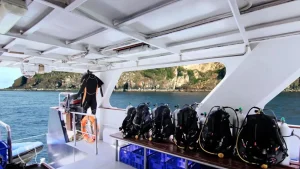
Divers on VVIP, VIP and Deluxe phinisi trips can often pair a Pink Beach stop with one or two nearby sites on the same day, chosen according to your certification level and current strength. Our guide to the sites people search most in Komodo explains how we match conditions to experience.
Pink Beach is also a clear example of why careful conservation matters. Removing coral fragments and shells from the beach gradually reduces its color. Anchoring carelessly can damage the coral that continually “feeds” the pink grains to the shore. That is why we prioritize:
- Using moorings where available instead of dropping heavy anchors near the reef.
- Briefing guests not to take sand, coral, or shells as souvenirs.
- Choosing routes and timings that avoid putting large groups on fragile sections of the beach at once.
For a broader view of how Pink Beach and similar sites fit into wider sustainability efforts, see our content on sustainable Komodo travel and responsible boats and Komodo conservation.
Sailing to Pink Beach with Best Liveaboard Komodo: Trip Types & Indicative Costs
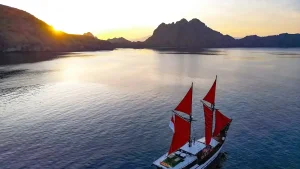
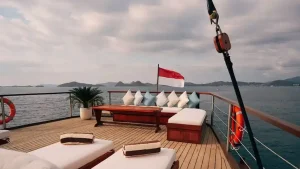
Seeing why Pink Beach Komodo is pink is only part of the experience; how you get there matters. Best Liveaboard Komodo curates 3D2N to 7D6N sailing and diving liveaboards across VVIP, VIP, and Deluxe phinisi classes, plus motor yachts, catamarans and superyachts, with both private charters and shared-cabin departures.
Indicative investment ranges (always depending on vessel, season, exact itinerary, and group size) include:
- 1-day speedboat charter from Labuan Bajo to Pink Beach and key nearby highlights: typically from around USD 400 for the whole boat for about 4–8 passengers.
- 2D1N private phinisi covering Padar, Komodo or Rinca, and Pink Beach: usually about USD 200–350 per person when a group of eight shares the boat.
- Motor yacht charters on a per-day basis: indicative bands of about USD 1,500–3,000 per day, often working out to around USD 250–500 per person depending on how many guests share.
- Superyachts with concierge-level service: often in the range of USD 5,000–12,000 per day, or roughly USD 830–2,000 per person in a full group scenario.
- Bali–Komodo crossings (7–10 days) that include Pink Beach and extended diving: frequently priced in an indicative band of about USD 7,000–15,000 for the full voyage, depending on yacht class and route.
- Private superyachts by the week: from around USD 50,000 for bespoke itineraries.
- Ultra-luxury phinisi tier with VVIP service and large suites: typically from about USD 15,000+ per night for private charter.
These are indicative ranges only. Exact quotations are confirmed one-to-one on WhatsApp after we clarify dates, guest count, cabin type and whether your priority is snorkeling, diving, or photography-focused stops like Pink Beach. Our article on what a Komodo liveaboard costs explains the main cost drivers in more detail.
We also support solo travelers, couples and families with shared-cabin departures and family-focused charters. For example, you can compare private charter vs shared-cabin trips or look at our guidance on family-friendly Komodo trips with kids to decide how you want to experience Pink Beach.
Planning Your Pink Beach Visit from Labuan Bajo
Most Pink Beach departures start from Labuan Bajo in Flores, the gateway town served by regular flights from Denpasar (Bali), Jakarta and other Indonesian hubs. From there, we arrange:
- Private and VIP transfers from the airport to your yacht or phinisi.
- Boarding timed around check-in windows and harbor rules.
- Briefings covering sea conditions, Komodo National Park regulations, and safety procedures.
To minimize surprises, we walk guests through a clear planning flow that includes confirming dates, vessel class (Deluxe, VIP, VVIP), shared or private cabin preferences, and how prominently you want Pink Beach featured within your sailing plan. Our article on booking Labuan Bajo liveaboards outlines that process in more depth.
If you are specifically curious about why Pink Beach Komodo is pink, our guides and cruise directors are happy to explain the biology and geology on board, often with live examples from the sand and reef (observed, not removed). For more structured Q&A, you can also review our Best Liveaboard Komodo FAQ.
To plan a Labuan Bajo departure that includes Pink Beach at the right time of day and season for its strongest color, contact our specialists on WhatsApp chat or email sales@komodoluxury.com for a tailored, up-to-date proposal.